

Greener Homes Alliance
Supporting SME developers to build energy-efficient homes for a greener future
About the Alliance
Build green, borrow cheaper
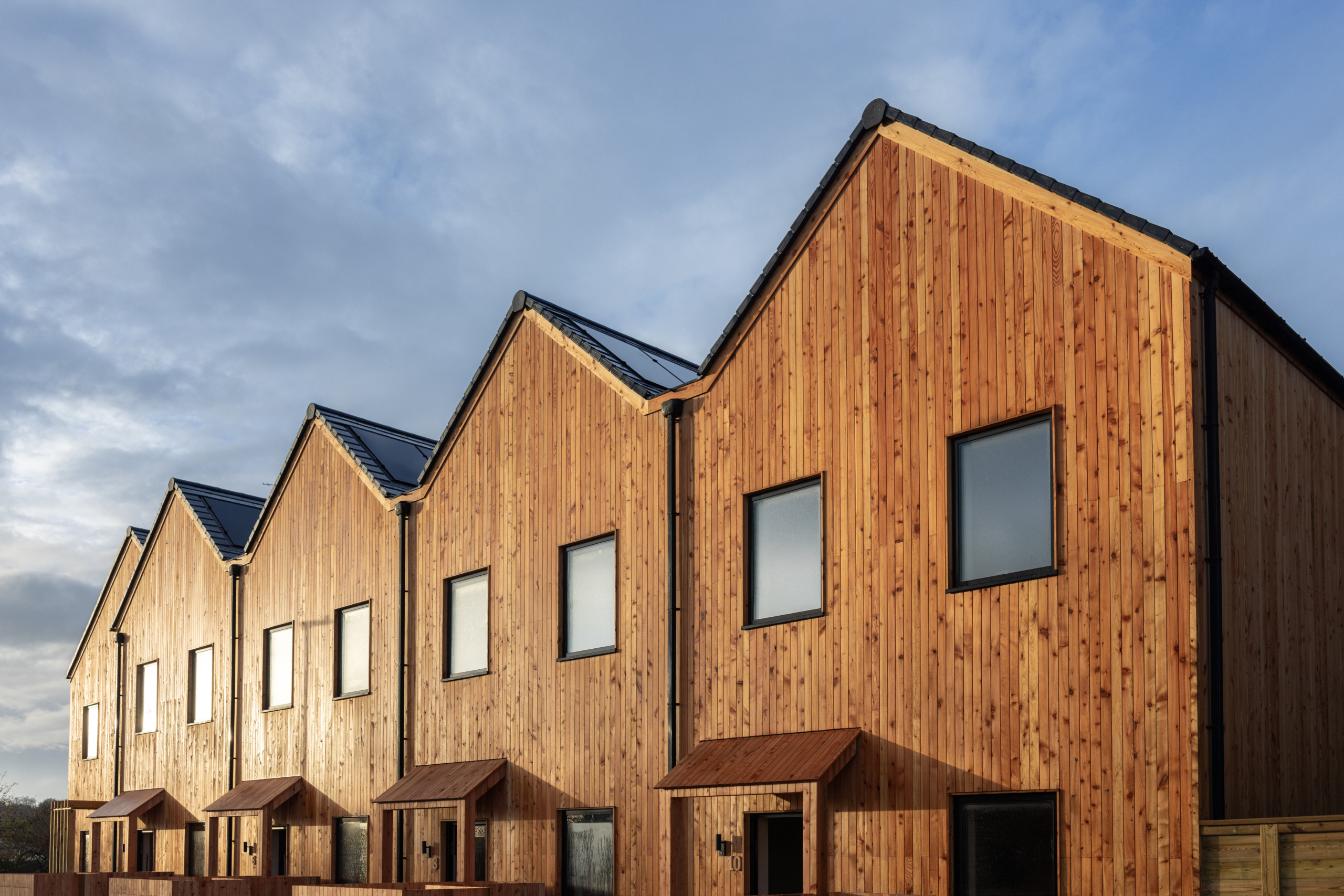
The Greener Homes Alliance is our partnership with Homes England, providing development finance to SME developers building energy-efficient homes across England. The greener the build, the cheaper the borrowing – with lower rates for schemes that hit our sustainability criteria. Since 2021, we’ve committed over £150m to more than 550 homes across the country.
Supported by

Key achievements
750+
New homes funded
40%
EPC A rated
100%
SAP 85+
Loan details
For developers looking to provide high-quality, energy efficient homes across the country
£2m-£20m
Loan size
70%
Max. LTGDV
6% p.a.
Starting rate (full discount)
Sustainability discounts
Through the Greener Homes Alliance, we’ve granted a total of 24 discounted loans, sharing knowledge, best practice and new ideas with developers across the sector to help deliver more than 773 energy-efficient homes.
Building on this success, we’ve expanded the partnership through Greener Homes Alliance 2. This next phase introduces broader ESG-focused criteria, encouraging developers to deliver homes with a wider range of environmental and social benefits, and create lasting impact for local communities.
How to benefit from the discounts
The more of the following criteria a scheme meets, the greater the interest rate discount:
- 1.25% pa discount for meeting 4 or more additional criteria
- 2% pa discount for meeting 6 or more additional criteria
Minimum Requirements to be eligible
To qualify, all homes within the scheme must meet the following:
- All homes to be fossil fuel-free
- Average SAP score of 85+
Additional criteria includes:
- Average SAP score of 92+ (EPC A)
- More than 50% of new homes ‘Zero Bills’ ready
- Biodiversity Net Gain of more than 20%, via on-site or off-site measures
- More than 90% of site waste diverted from landfill
- Developer to be a supporter of Lighthouse Charity
- Real Living Wage paid to all workers on-site
- On-site affordable housing provision above 25%, or in line with the local plan
- Modern Methods of Construction (MMC, categories 1–5) in the building’s fabric
- Potable water usage reduced to below 110 litres per person per day
- Regeneration of brownfield sites
Meet the team
Get in touch with our specialists for more information.




Case studies: Greener Homes Alliance
Discover how our support helps SME developers deliver high-quality, energy-efficient homes for a more sustainable future.
FAQs
What is the Greener Homes Alliance (GHA)?

The Greener Homes Alliance (GHA) is our partnership with Homes England, providing development finance to small and medium-sized enterprise (SME) developers building energy-efficient new homes. It combines standard development funding with sustainability-linked incentives, supporting the delivery of greener housing across England.
Who is eligible for GHA finance?
The Alliance is designed for SME developers delivering schemes in England that meet the programme’s sustainability criteria. To qualify, all homes within the scheme must be fossil fuel-free and have an average SAP score of 85+.
What discounts are available?
Schemes meeting 4 or more additional sustainability criteria qualify for a 1.25% discount, and those meeting 6 or more qualify for the maximum available discount of 2% p.a., applied against our fixed rate, which starts from 8% p.a. before any discount.
How do I achieve the maximum discount?
To achieve the maximum 2% p.a. discount, a scheme needs to meet 6 or more additional criteria, covering areas such as on-site affordable housing, biodiversity net gain, waste reduction, potable water usage, Modern Methods of Construction, Real Living Wage commitments and Zero Bills readiness. Meeting 4 or more criteria unlocks a 1.25% discount. Our expert team can guide you through each individual criteria point.
What is the minimum SAP score required?
Schemes need to achieve a minimum n average SAP score of 85 or above to be eligible, alongside being fully fossil-fuel free. Schemes reaching an average SAP of 92 or above (equivalent to EPC A) count this towards the additional criteria used to unlock a larger discount.
What does fossil-fuel free mean?
A fossil-fuel free development doesn’t rely on gas, oil or other fossil fuels for heating or hot water, instead using electricity for heating through low carbon technologies such as such as air or ground source heat pumps.
What loan sizes are available?
Loans through the Greener Homes Alliance range from £2m to £20m.
What is the interest rate on a Greener Homes Alliance loan?
Greener Homes Alliance loans are offered on a fixed-rate basis, starting from 8% p.a., with discounts applied to this rate reaching as low as 6% p.a fixed.
What types of property are eligible for Greener Homes Alliance finance?
We can assist with houses and flats, mixed-use schemes (with less than 20% commercial content, subject to eligibility), build-to-rent and affordable housing, with a minimum of 5 units per scheme.
How is GHA different from standard development finance?
GHA works in the same way as our standard development finance, with staged drawdowns and a land loan available on day one but adds a sustainability-linked interest rebate for schemes meeting the programme’s environmental criteria — and is only available for schemes in England.
Sustainability FAQs
What is an SAP score?
SAP (Standard Assessment Procedure) is the UK government’s methodology for assessing the energy performance of a home. It’s used to calculate a property’s EPC rating, based on factors like insulation, heating systems and renewable technology.
What SAP score is required under GHA?
An average SAP score of 85 or above is required for a scheme to be eligible, alongside being fully fossil-fuel free. Schemes achieving an average SAP of 92 or above, equivalent to EPC A, can count this towards unlocking a larger discount.
What is an EPC A rating?
An EPC A rating is the highest energy performance band a home can achieve, reflecting excellent insulation, efficient heating and often on-site renewable generation such as solar PV.
How do I build fossil-fuel free homes?
Fossil-fuel free homes typically use electric heating technologies such as air or ground source heat pumps, rather than using gas-powered boilers.
Are gas boilers permitted?
Gas boilers aren’t compatible with fossil-fuel free or Zero Bills standards and won’t meet the requirements of the incoming Future Homes Standard either, which effectively rules out gas heating in new homes from 2027.
What are air source heat pumps?
Air source heat pumps extract heat from the outside air to heat a home and its hot water, using electricity rather than gas. They’re one of the main low-carbon heating technologies used in energy-efficient new homes.
What are ground source heat pumps?
Ground source heat pumps extract heat from the ground via buried pipework, offering a highly efficient, low-carbon alternative to gas heating, though typically at a higher upfront installation cost than air source systems.
What are Zero Bills homes?
Zero Bills™ homes are highly energy-efficient homes developed in partnership with Octopus Energy, designed so residents can benefit from zero energy bills for a guaranteed between 5-10 years. Schemes achieving Zero Bills status are well positioned to meet the Greener Homes Alliance’s highest sustainability tier.
What is biodiversity net gain?
Biodiversity net gain (BNG) is a planning obligation in England that means new developments must leave a site’s biodiversity in a measurably better state than before development, typically through on-site habitat creation or off-site contributions.
What are modern methods of construction (MMC)?
Modern methods of construction refer to building techniques such as off-site manufacturing and modular or volumetric construction, which can speed up build programmes and improve energy performance compared with traditional on-site methods.
Future Homes Standard FAQs
What is the Future Homes Standard?
The Future Homes Standard is an update to Part L of the Building Regulations for England, requiring new homes to produce at least 75% lower carbon emissions than homes built to 2013 standards. It effectively mandates low-carbon heating (such as heat pumps) and solar PV in new-build housing.
Will gas heating be banned in new homes?
The Future Homes Standard doesn’t explicitly ban gas boilers by name, but the carbon emissions targets are set at a level no fossil fuel heating system can meet — so in practice, gas heating won’t be viable in new homes built to the standard. The rules come into force on 24 March 2027, with a transitional period for schemes already underway running until 24 March 2028.
How can developers prepare for Future Homes Standard requirements?
Developers can prepare by designing schemes around low-carbon heating and on-site renewable generation now, rather than waiting for the standard to take effect, and by working with lenders and partners experienced in delivering energy-efficient homes.
Do energy-efficient homes achieve higher sales values?
Evidence increasingly suggests energy-efficient homes can command a premium, driven by lower running costs and rising buyer demand for sustainable properties, though the exact uplift varies by location and market.
Are buyers willing to pay more for sustainable homes?
Many buyers are placing greater value on sustainability credentials, particularly given rising energy costs, though willingness to pay a premium varies by buyer type and region.
Explore more ways we lend
From bridging and development to buy-to-let, we finance a range of property projects. Discover all our specialisms below.

Bridging
Short-term, fast and flexible finance for acquisitions, refinances and equity release.
Development & refurbishment
Helping projects break ground and grow in niche sectors and regional hotspots.

Buy-to-let
Straightforward funding solutions tailored to landlords’ portfolios and future plans.