Charitable foundations have always existed to solve some of society’s most pressing challenges.
Whether that’s tackling homelessness, supporting people living with dementia, improving health outcomes or widening opportunity, the mission is clear. Traditionally, grants have been the main way foundations deliver that impact.
But increasingly, organisations are asking a broader question:
“If our grants reflect our mission, shouldn’t our investments do the same?”
The conversation has shifted. Rather than debating whether values belong in an investment strategy, the focus is now on how to align purpose and portfolio in a way that’s responsible, credible and financially sound.
For many foundations and endowments, social infrastructure is becoming an important part of that answer.
From impact allocation to integrated strategy
Historically, impact investing often sat as a small allocation alongside a larger, more traditional endowment.
Today, that distinction feels less necessary. Across the industry, there’s a growing consensus that impact and return don’t need to sit separately. Investments can deliver competitive financial outcomes while also contributing positively to society.
For foundations in particular, this introduces the idea of a “double bottom line” – where capital is deployed not only to generate returns that support future grant-making, but also to create direct, measurable impact through the investments themselves.
Governance, scrutiny and long-term resilience still matter. But impact is no longer viewed as something that sits in isolation – it can be embedded across the portfolio
Why social infrastructure stands out
Social infrastructure connects capital to essential services and long-term societal needs.
It sits in areas that underpin communities:
- housing
- care
- health
- social connection
Unlike some asset classes, the outcomes are tangible. Homes are delivered. Care environments are improved. Energy performance standards rise. These are visible, measurable results.
Traditional philanthropy often addresses the symptoms of societal challenges. Social infrastructure investing can help strengthen some of the underlying structures – providing stable housing, high quality care settings and more resilient community assets.
For long-term charitable foundation capital, that alignment can be compelling.
Affordable housing: essential need, structural support
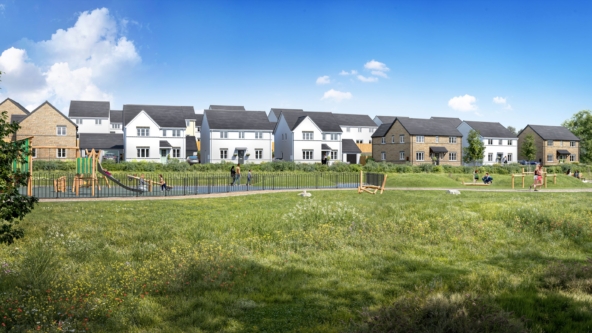
Access to secure, affordable housing underpins health, employment, education and long-term stability.
In England alone, more than 1.34 million households are currently on social housing waiting lists1. That scale of demand reflects a persistent structural need rather than a short-term cycle.
Capital is already being directed into this space. A number of foundations have allocated capital to the Octopus Capital affordable housing strategy, which recently came second in the Endowments Investing Challenge (EIC). This signals a broader trend of mission-aligned capital being deployed into essential housing infrastructure.
At the same time, government commitments – including long-term renewal programmes for social and affordable housing – are designed to strengthen the sector and improve delivery standards. Policy support, combined with enduring demand, helps create a clearer investment backdrop.
As an asset class, affordable housing typically offers long-term, income-generating characteristics linked to essential need. Improvements in energy efficiency and EPC ratings can also help reduce household costs and improve quality of life, while future-proofing assets over time.
And for foundations and endowments, affordable housing offers the opportunity to allocate capital in ways that contribute to positive societal outcomes while supporting durable income streams.
Care and healthcare infrastructure: demographic drivers and long-term demand
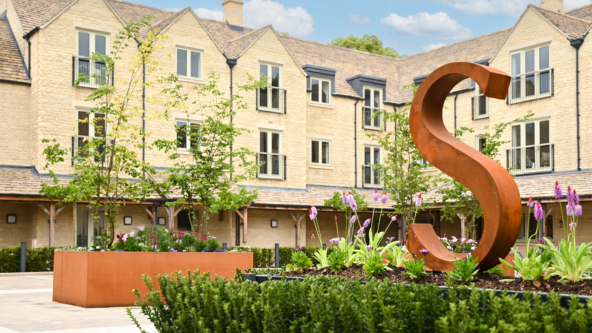
It’s well known that care infrastructure is underpinned by powerful demographic trends.
Around 1 million people in the UK are currently living with dementia2, and the population continues to age. Demand for high-quality care environments is driven by long-term demographic shifts rather than short-term economic cycles.
As with housing, care assets are typically long duration in nature. They provide essential services and often benefit from stable occupancy driven by structural demand.
Well-designed care environments can improve wellbeing, clinical outcomes and overall quality of life for residents. At the same time, they can offer resilient income characteristics aligned with long-term capital.
In practice, this approach is already being adopted. For example, foundations are increasingly allocating to the Octopus Capital healthcare strategy, reflecting growing interest in aligning capital with care provision.
In this context, care infrastructure represents another way to align investments with socially essential services supported by enduring demand.
Putting purpose to work
For many foundations and endowments, the question is no longer whether investment strategy should reflect mission, but how to do so thoughtfully and responsibly.
This is where the idea of a “double bottom line” becomes increasingly relevant.
Social infrastructure – including affordable housing and care – provides one way to put that thinking into practice.
Capital can be deployed to generate returns that support future grant-making, while at the same time being invested into assets that contribute to positive societal outcomes. In this way, the endowment itself becomes an extension of the foundation’s purpose, rather than something separate from it.
Shaped by demographic demand, policy support and long-duration income profiles, these assets can offer characteristics that contribute to resilience – an important consideration for endowments designed to endure over decades, and often in perpetuity.
For organisations stewarding capital with that long-term responsibility in mind, investments in essential social infrastructure assets can help support communities and services that society depends on – now and for future generations.
Approached carefully, they can also play a role in sustaining foundation missions over time.

Start the conversation
If you’d like to explore how social infrastructure could sit within your organisation’s endowment strategy, please get in touch with the team to start the conversation.
1 GOV.UK – Social housing lettings in England, tenants: April 2024 to March 2025
2 Alzheimer’s Society – Facts for the media about dementia. 2025